 Lab History
 This Lab was established in 2007 within the School of Electrical Engineering and Computer Science with the vision of creating a world-class research and education environment. From its inception, the lab has been dedicated to pushing the boundaries of knowledge in the fields of embedded systems, machine learning, and signal processing. The founding mission was not only to conduct high-level academic research, but also to integrate practical, hands-on experience that would prepare students and researchers to tackle real-world challenges. This unique combination of theoretical depth and applied innovation has defined the lab’s identity and impact over the years.
Throughout its development, the lab has continually evolved to stay at the forefront of technological advancement. It has fostered a dynamic ecosystem where undergraduate and graduate students, postdoctoral researchers, and faculty members work together on interdisciplinary projects that span robotics, intelligent sensing, real-time systems, and advanced control algorithms. By maintaining close ties with industry partners, the lab also plays a key role in technology transfer, turning academic insights into practical solutions across sectors such as healthcare, transportation, and autonomous systems.
 Research The lab was founded by Prof. Moshe Guy, a renowned expert in control theory, hardware design, and artificial intelligence. With a distinguished career that bridges both academia and the tech industry, Prof. Guy envisioned a research environment that would break traditional boundaries and encourage deep collaboration between disciplines.
His leadership shaped not only the scientific direction of the lab but also its educational ethos — placing strong emphasis on mentorship, intellectual curiosity, and excellence in execution.
Under his guidance, the lab established itself as a center of innovation where students are empowered to lead ambitious projects, publish in top-tier journals, and participate in international conferences and competitions. Many of the lab’s alumni have gone on to pursue successful careers in academia, global tech companies, and startups, reflecting the lasting influence of the lab’s training and culture.
Today, the values and vision that Prof. Guy instilled remain firmly embedded in the lab’s identity, driving continued exploration and discovery in some of the most exciting and rapidly evolving areas of electrical engineering and computer science.
Since its founding, the lab has reached a number of important milestones:
In 2012, the lab was recognized as a center of excellence in signal processing, further solidifying its reputation as a leader in the field.
The research conducted in the lab has led to tangible advancements in areas such as autonomous systems, communication networks and real-time embedded computing. Several technologies developed in the lab have been adopted by industry partners, and some have laid the foundation for startup companies founded by lab alumni.
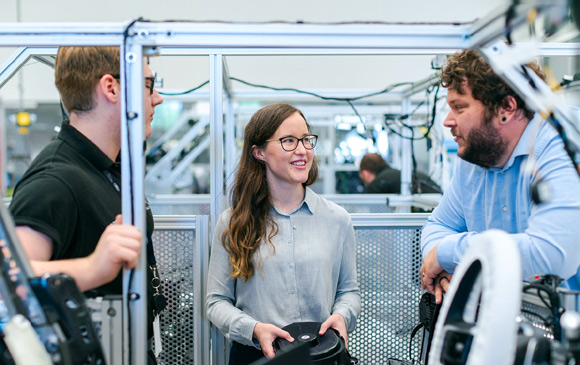 Today, This Lab continues to grow and thrive, building on its strong foundation and expanding its impact across both academic and industrial domains. It fosters a vibrant, multidisciplinary, and inclusive environment where undergraduate students, graduate researchers, and postdoctoral fellows work side by side on groundbreaking research. The lab encourages curiosity-driven exploration while promoting collaboration across diverse fields such as artificial intelligence, embedded computing, signal analysis, control systems, and human–machine interaction. This cross-pollination of ideas not only drives innovation but also ensures that researchers are equipped with the broad perspective needed to tackle complex, real-world challenges.
The lab actively supports a culture where learning, experimentation, and teamwork are central values. Students are encouraged to think critically, challenge existing assumptions, and develop both the theoretical knowledge and practical skills necessary for advanced technological development. Through regular seminars, workshops, and project-based learning, the lab provides its members with continuous opportunities for academic and professional growth. Collaborations with leading international institutions and industry partners further enhance the scope and relevance of the lab’s work, creating pathways for joint research, internships, and real-world deployment of technologies.
At its core, the lab remains firmly committed to pushing the boundaries of knowledge and innovation, while simultaneously training and mentoring the next generation of engineers and scientists. Its alumni are making significant contributions in academia, industry, and entrepreneurship — a testament to the lab’s enduring emphasis on excellence, creativity, and impact. As the field of electrical engineering and computer science continues to evolve, the lab adapts and leads, remaining at the forefront of research and education in a rapidly changing world.

